

 See My Latest Article on HelloNation
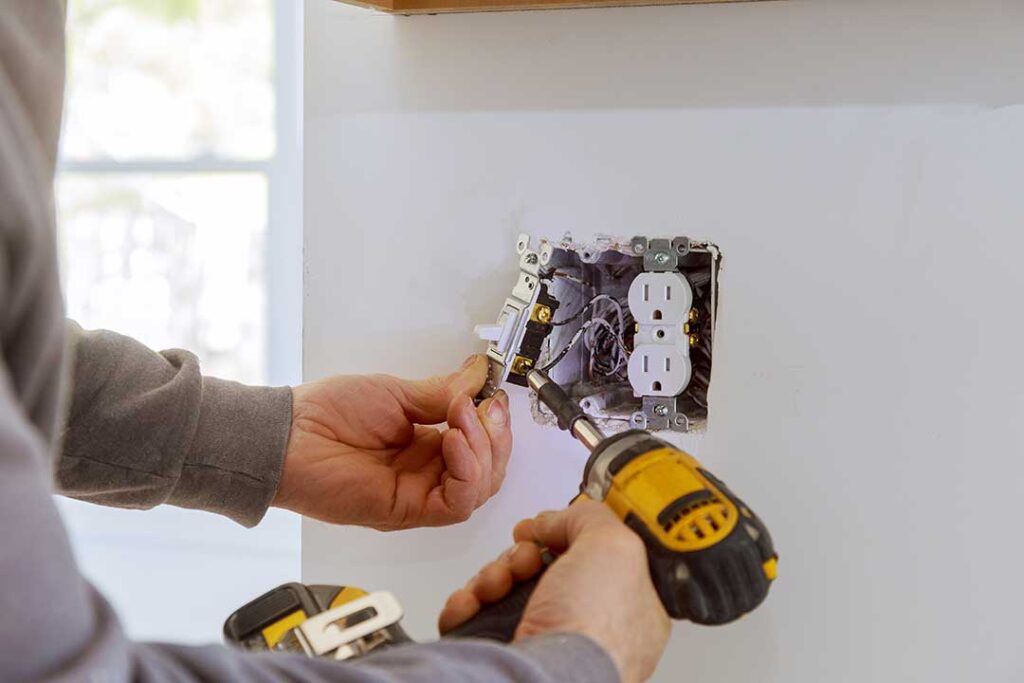
A tripped circuit breaker usually means an electrical circuit carried more current than it was designed to handle. Resetting it can be simple, but only when there are no signs of fire, water damage, arcing, or equipment failure.
What does a tripped breaker look like?
A tripped breaker may sit between the “on” and “off” positions rather than moving fully to “off.” Some breaker panels also have a small indicator window that changes color or shows a trip marking.
Before touching the panel, notice what stopped working. A trip may affect:
- Several outlets in one room
- Lights and receptacles in part of the home
- A basement, garage, kitchen, or exterior circuit
- A major appliance or heating-related circuit
In older homes, labels may be incomplete or inaccurate. Do not assume the breaker serving a particular room is correctly identified until the circuit has been tested carefully.
What should be checked before resetting the breaker?
Look and smell for warning signs before placing a hand on the breaker. Do not attempt a reset if there is smoke, a burning odor, melted plastic, visible scorching, buzzing, sparking, or heat coming from the panel or an outlet.
Also stop if:
- Water has entered the panel or electrical equipment
- The floor around the panel is wet
- An outlet, switch, or cord appears damaged
- A breaker will not move normally
- Someone has received an electrical shock
- The outage followed flooding, storm damage, or a major lightning event
Keep away from the panel in these situations and use emergency assistance when there is an immediate danger. Water and electricity are especially hazardous during spring thaw, heavy rain, basement seepage, and winter weather that damages service equipment.
How can a household safely reset one breaker?
If the panel and surrounding area appear dry and undamaged, use this procedure:
1. Turn off or unplug equipment on the affected circuit.
Switch off lamps, countertop appliances, space heaters, tools, and other loads connected to the circuit. Unplug only items that can be reached safely without moving into water or handling damaged cords.
2. Stand to the side of the panel.
Keep your face and body slightly away from the panel while operating the breaker. Use one hand, and do not touch metal parts inside the panel.
3. Find the breaker that has moved from its normal position.
A tripped breaker may not look fully off. Move it firmly to the full “off” position first. This resets the internal mechanism.
4. Move it to “on.”
Push the breaker to the on position with steady pressure. Do not force it if it feels loose, will not stay on, or immediately trips again.
5. Restore equipment one item at a time.
Turn appliances and devices back on separately. If the breaker trips when one particular item is used, unplug that item and leave it out of service until the cause is known.
A breaker should not be held in the on position or repeatedly switched back on. The trip mechanism is designed to interrupt power when the circuit detects an unsafe condition.
Why does a breaker keep tripping?
Repeated trips usually indicate an unresolved problem rather than a breaker that needs more resets. Common causes include overloads, short circuits, ground faults, damaged cords, failing appliances, or moisture.
An overload happens when too many high-wattage devices share one circuit. In a kitchen, for example, a toaster oven, microwave, coffee maker, and portable appliance may draw enough current together to trip the breaker. In colder months, portable heaters can create similar problems because they use substantial power for long periods.
A short circuit occurs when energized conductors make unintended contact. This can happen inside an appliance, cord, outlet, switch, or section of wiring. A ground fault is a related condition in which current takes an unintended path toward ground.
The pattern of the trip can provide useful information:
- The breaker trips immediately after reset: A short circuit, ground fault, or serious equipment problem may be present.
- The breaker trips after several minutes: An appliance may be overheating, or the circuit may be overloaded.
- The breaker trips only during rain or damp weather: Moisture may be reaching an outdoor outlet, exterior wiring, basement equipment, or another vulnerable location.
- The breaker trips when one device is used: That appliance, its cord, or the receptacle may be involved.
- The breaker trips with no obvious load: Wiring, a connected device, or the breaker itself may need evaluation.
Is it safe to keep resetting the breaker?
No. Repeatedly resetting a breaker can increase the risk of overheating, electrical arcing, equipment damage, or fire. A breaker that trips once after several devices are connected may be responding to a temporary overload. A breaker that trips repeatedly should remain off until the cause is identified.
Do not replace a breaker with one rated for more amperage. The breaker rating must match the circuit wiring and equipment. Installing a larger breaker to stop nuisance trips can allow wiring to overheat before the breaker responds.
Do not remove the panel cover to inspect wiring unless qualified to work inside electrical equipment. Turning off a branch breaker does not necessarily make every part of the panel safe; service conductors and other components may remain energized.
What should be done if the breaker will not reset?
Leave the breaker in the off position if it trips again immediately, will not latch, feels unusually hot, or makes noise. Unplug accessible devices on that circuit only if doing so is safe, then avoid using the affected outlets and switches.
If the circuit supplies critical equipment, such as a sump pump or heating system, the situation may require prompt attention because an extended outage can cause additional property damage during freezing weather or heavy rain. Do not use extension cords as a permanent substitute for a failed circuit, especially for heaters, pumps, refrigerators, or other high-load equipment.
A qualified electrician is appropriate when the trip repeats, the cause is unclear, the panel is damaged, wiring is exposed, or an appliance may have caused a fault. Electrical work may also require compliance with applicable New York safety and permit requirements, depending on the work involved.
What if the whole home loses power?
A branch breaker reset will not restore power if the outage affects the entire property. First determine whether neighboring homes or public areas also appear to be without electricity. If the outage is widespread, the problem may be outside the home.
If only the home is affected, check whether the main disconnect has tripped, but do not operate it if there is damage, water, smoke, or unusual heat. Homes with older panels may have different layouts and equipment than newer construction, so the appearance of a main disconnect can vary.
Keep flashlights accessible rather than relying on candles near curtains, furniture, or other combustible materials. During winter outages, use generators only outdoors and well away from doors, windows, and ventilation openings. Never operate a generator inside a home, basement, garage, or enclosed porch because carbon monoxide can accumulate without warning.
How can tripped breakers be prevented?
Reduce unnecessary load on individual circuits and avoid operating multiple high-wattage appliances from the same area at once. Replace damaged cords and do not use outlets that are loose, discolored, warm, or cracked.
For local homes with basements, garages, exterior receptacles, and seasonal equipment, keep electrical connections dry and protected from snowmelt, rain, and condensation. Test ground-fault protection according to the device instructions, and treat any outlet that will not reset or repeatedly trips as a warning rather than an inconvenience.
A single reset may restore normal operation. A second or repeated trip is information: the circuit is signaling that something still needs attention.